A suspected brain stroke is a medical emergency that can lead to brain damage. This indicates the significance of immediate diagnosis.
A brain stroke is an emergency that occurs when blood flow to a specific part of the brain is obstructed. This mainly takes place because of a ruptured vessel or a blockage. This results in lowering the brain’s oxygen level. The main types of strokes are ischemic stroke, hemorrhagic stroke, and transient ischemic attack.
The main culprits of brain stroke are high cholesterol, migraine headache, excessive drinking, etc. In Canada, stroke is the third leading cause of death. This high prevalence is mainly because of late diagnosis. Early diagnosis matters in stroke diagnosis because every minute counts the loss of 1.9 million neurons. This article evaluates the diagnosis process of a suspected brain stroke.
Identifying a Suspected Brain Stroke: What are the Early Warning Signs?
A brain MRI in Montreal can be a key diagnostic technique for a brain stroke. Before you understand how to diagnose a brain stroke, you need to be aware of the early signs. Let’s understand.
| Early sign | What to observe |
| Face | Drooping of one side of the face or a numb feeling while smiling |
| Arms | Numbness or weakness in one arm |
| Speech | Slurred speech |
| Vision | Blurred vision |
Table 1: Early warning signs of brain stroke
Referring to the FAST method, you need to value time and call emergency services if you observe any symptoms in the face, arms, or speech.
F: Is your face drooping?
A: Do your arms feel weak?
S: Is your speech slurring?
T: If the answer to the above is yes, it’s time to call for help.
What to Expect During a Suspected Brain Stroke?
The first 60 minutes (golden hour) after symptom onset are very crucial in diagnosing a brain stroke. You need to reach the hospital as soon as possible when you witness the symptoms. Let’s see the physical and neurological examinations that are performed in the emergency room.
| Assessment | Why is it done |
| Blood pressure | Detecting the risk factors of stroke |
| Blood pressure | Ruling out hypoglycemia |
| Oxygen level | Ensuring adequate brain oxygen |
| Neurological examinations | Identifying affected brain areas |
Table 2: Physical and neurological examinations in a suspected brain stroke
What Tests are Done to Confirm a Brain Stroke?
Doctors will perform a number of tests to accurately diagnose if you have had a brain stroke.
Imaging Tests
First, there will be one or more imaging tests to notice physical changes in your brain.
CT scan
You need to undergo a brain scan in Montreal to diagnose a brain stroke. Here, a series of X-rays is used to create a detailed image of the brain. A CT scan is capable of identifying an ischemic stroke, a tumour, or bleeding in the brain.
MRI
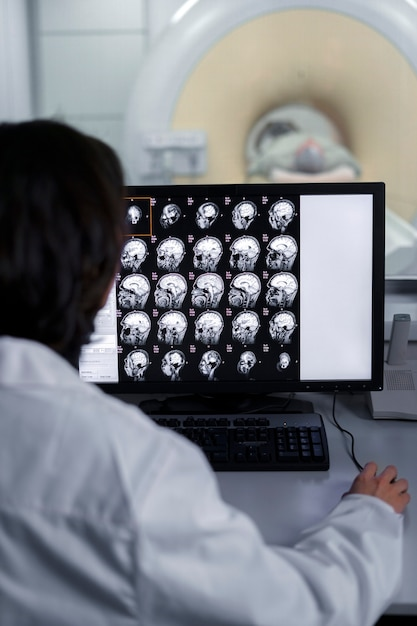
In MRI, powerful radio waves and a magnetic field are used to prepare a detailed view of your brain. This helps to detect whether any brain tissue is damaged by an ischemic stroke or a brain hemorrhage. A brain MRI in Montreal helps to detect smaller damage in the initial period.
CT or MR Angiography
In specific cases, doctors inject a special dye into the vein. This creates a detailed map of the blood vessels. The desired results are blockage in the blood vessels (CT Angiography) and inappropriate blood flow patterns (MR Angiography).
Cardiac and Vascular Tests
Heart problems result in brain strokes by causing blood clots that form and travel to the brain. Here are the common tests that are done to find the cause of the brain stroke.
Echocardiogram
The key function of an echocardiogram is to create a detailed image of your heart by applying sound waves. This helps to identify the clots in the heart that have travelled to the brain, thereby causing the stroke.
ECG
This test is done to record the electrical activity of your heart. This is needed to detect arrhythmias. If you have an irregular heartbeat, an ECG is to be performed to identify it.
Carotid ultrasound
Doctors rely on carotid ultrasound to create detailed images of the carotid arteries in the neck. This test shows the buildup of fatty deposits (plaques) that result in a brain stroke.
What Happens After Diagnosing a Brain Stroke?
When a brain stroke is diagnosed, the first thing that the doctor needs to understand is its type (ischemic or hemorrhagic). If it is an ischemic stroke, clot-busting drugs are administered. Contrarily, diagnosing a hemorrhagic stroke comprises controlling bleeding, lowering brain pressure, and managing blood pressure.
Acute hospital care is important when treating patients with a suspected brain stroke. Here, patients are kept under proper monitoring in an ICU or a specific stroke unit for 5 to 7 days. Referring to rehabilitation planning, the common considerations are physical therapy, occupational therapy, speech therapy, etc.
Wrapping Up
A suspected brain stroke is a medical emergency that needs to be addressed quickly. The initial signs are drooping of one side of the face, numbness in the arms, slurred speech, etc. A brain scan in Montreal is a key imaging test that is done to diagnose the condition. Well, your doctor might opt for an MRI. The fundamental cardiac and vascular tests are echocardiogram, ECG, and carotid ultrasound.
Addressing a Suspected Brain Stroke?
Choose a reputable private medical clinic in Montreal that specializes in accurate diagnostic examinations. Get the perfect diagnosis if you deal with a suspected brain stroke. Time is brain in this medical emergency, and getting an early treatment helps in treating the condition in the right way.