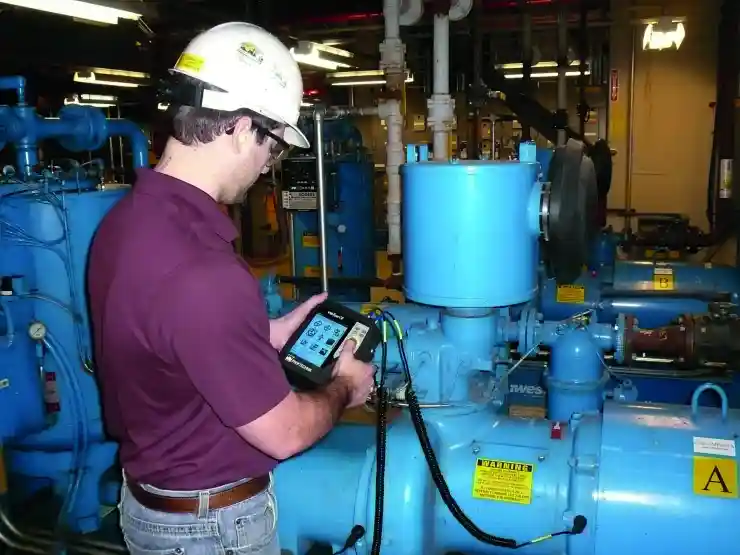
Modern organizations find themselves in an environment where there is a continuous push for increased efficiency, reduced costs, and improved performance. Breakdowns cause disruption of processes, unanticipated costs, and difficulties in dealing with customers. Predictive maintenance is a technique that relies on data collected from the machines and sensors in order to make predictions about what may happen in the future. With the growth in technology, predictive maintenance has changed from being a distinctive process to a competitive edge. This is among the five reasons why predictive maintenance is becoming popular.
Reducing Unexpected Downtime
An unforeseen equipment malfunction could make critical processes cease. Compared to reactive maintenance, which is a technique aimed at solving problems once they have arisen, predictive maintenance is a method whereby any indication of a problem associated with the machinery is detected early enough through different indicators like temperature levels and vibration patterns. It makes sure that the maintenance process is predictable enough for companies to maintain uninterrupted production. What’s more, it makes sure that workers are focused on productivity and not on solving problems associated with their machinery.
Prolonging Equipment Life
Well-maintained machinery has the potential to stay productive for longer periods of time, thus allowing organizations to derive maximum value out of their capital expenditure. Predictive monitoring helps to detect small problems that could lead to heavy wear or damage at a much earlier stage. Businesses seeking greater insight into machinery conditions can invest in the best remote vibration monitoring services to detect abnormal vibration patterns and identify potential mechanical problems. The problems that arise could be solved within the maintenance cycle rather than waiting until the component fails. This will help in decreasing the stress on components and allow them to function effectively for longer periods of time.
Controlling Maintenance Costs
Emergency maintenance can be costly because businesses have to incur costs for urgent labor, replacement of parts, fast shipping, or downtime. Predictive maintenance helps plan maintenance based on the condition of the equipment rather than a schedule. The maintenance team will focus on equipment that shows signs of wear and tear and ignore those in good working condition. It will help save costs in labor and parts. It will also make planning easier for the management team to know their future maintenance needs. In the long run, the saved costs will help in improving profitability.
Improving Productivity and Efficiency
Efficient machinery results in an efficient production process. In the case where the machinery functions efficiently, it is easier for employees to follow a schedule rather than constantly adjust to machine malfunctions. The practice of predictive maintenance is also useful in detecting the patterns in performance that reveal inefficiency. Companies can use this information to launch an investigation on issues arising out of inefficient energy usage, production process or the quality of the product. Using the data, the maintenance team learns about the efficiency of machinery in different circumstances. Consequently, companies can make more informed decisions about maintenance priorities and operational improvements.
Strengthening Competitive Position
In competitive markets, those companies that can provide quality products and services with cost control have advantages over others. Predictive maintenance helps in achieving both goals, since it enables making a more informed strategy for managing assets. When a company is aware of its asset conditions, it will be able to deal with possible problems, prevent disruption of its schedule, and make appropriate decisions regarding further investments. The data collected during the process of monitoring may also be used in the context of the overall digitization, linking the maintenance process with other business operations. This combination of reliability, efficiency, and informed decision-making can help businesses adapt more effectively as customer expectations and market conditions change.
Predictive maintenance has proved to be a good business model since it addresses many problems at the same time. With the help of reducing unexpected downtime, increasing the lifetime of equipment, managing maintenance costs, improving efficiency, and operations, it can bring many advantages to various industries. Rather than viewing maintenance as a necessity that should be performed without thinking about the consequences, organizations can look at the data from their equipment and make relevant decisions. Predictive maintenance is expected to stay a significant part of any business operations.