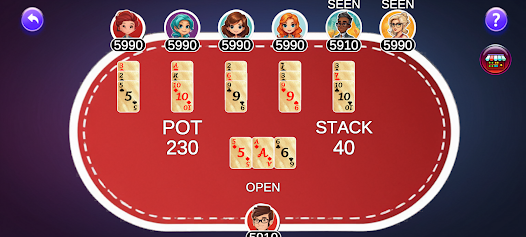
If you have ever watched a group of friends huddle around a deck during a festival evening, you have probably seen Teen Patti in action. The game’s charm lies in its balance: enough simplicity to welcome beginners, and enough depth to keep experienced players guessing. Today, mobile versions have carried that same energy onto phones and tablets everywhere.
Playing Blind or Seen
One of the features that gives Teen Patti its distinctive flavour is the choice between playing blind and playing seen. A blind player bets without looking at their cards, which keeps the stakes lower and adds an element of daring to the table. A seen player has checked their hand and therefore bets larger amounts, since they are acting on information. Skilled players use this dynamic deliberately, sometimes staying blind to project confidence or to keep their options open. For beginners, experimenting with both approaches is a great way to feel how information and risk interact. The lesson quickly becomes clear: knowing more is valuable, but it also raises the price of staying in the hand.
Players looking to explore further should check out this beginner’s guide to Teen Patti.
The Role of Bluffing
No discussion of Teen Patti is complete without bluffing, the art of representing a stronger hand than you actually hold. A good bluff relies on timing and credibility rather than bravado; it should fit naturally into the way you have been betting all along. Overuse is the classic beginner error, because opponents soon notice a player who raises on everything. Instead, treat the bluff as a spice rather than the main course. Pick your moments, watch how cautious players fold under pressure, and remember that the threat of a bluff can be as useful as the bluff itself. Handled with restraint, it becomes one of your most powerful tools.
The Basic Rules at a Glance
Every game begins with the boot amount, a small forced bet that ensures there is always something worth playing for. Three cards go to each player, and the action proceeds clockwise. On your turn you can match the stake to stay in, raise to apply pressure, or fold to protect your chips. The minimum and maximum bets are usually tied to whether you are playing blind or seen, which adds a neat layer of decision-making right from the start. Because the rules fit on a single page, Teen Patti is easy to teach, yet the choices it presents are surprisingly rich once real stakes are on the line.
Hand Rankings You Need to Know
Winning at Teen Patti depends on knowing which hands beat which. At the top sits the trail, or three of a kind, with three aces being the strongest of all. Next comes the pure sequence, three consecutive cards of the same suit, followed by a plain sequence of consecutive cards in mixed suits. After that comes the colour, three cards of one suit that are not in sequence, then a pair, and finally the high card when nothing else lines up. Committing this order to memory early saves a lot of second-guessing during a hand. Once the rankings feel automatic, you can spend your attention on the more interesting questions of betting and timing rather than pausing to work out who is ahead.
Final Thoughts
Teen Patti endures because it offers something for everyone: quick fun for the casual player and genuine depth for those who want to improve. Whether you are learning the rankings for the first time or refining your bluffing, the game rewards curiosity and patience in equal measure. Start slow, stay disciplined, and enjoy the process of getting better one hand at a time.