Construction teams often judge equipment by output, weight, and speed. Those figures matter, but access often decides whether a machine can complete the job at all.
The same principle applies to all work sites. A forklift moves heavy materials efficiently, but it cannot replace every lifting machine. Each item earns its place by solving a particular problem. Forklifts cost more or less according to lift height, capacity, fuel type and condition; compact rollers follow a similar pattern. Buyers need to look beyond the purchase figure and consider what the machine will do each day.
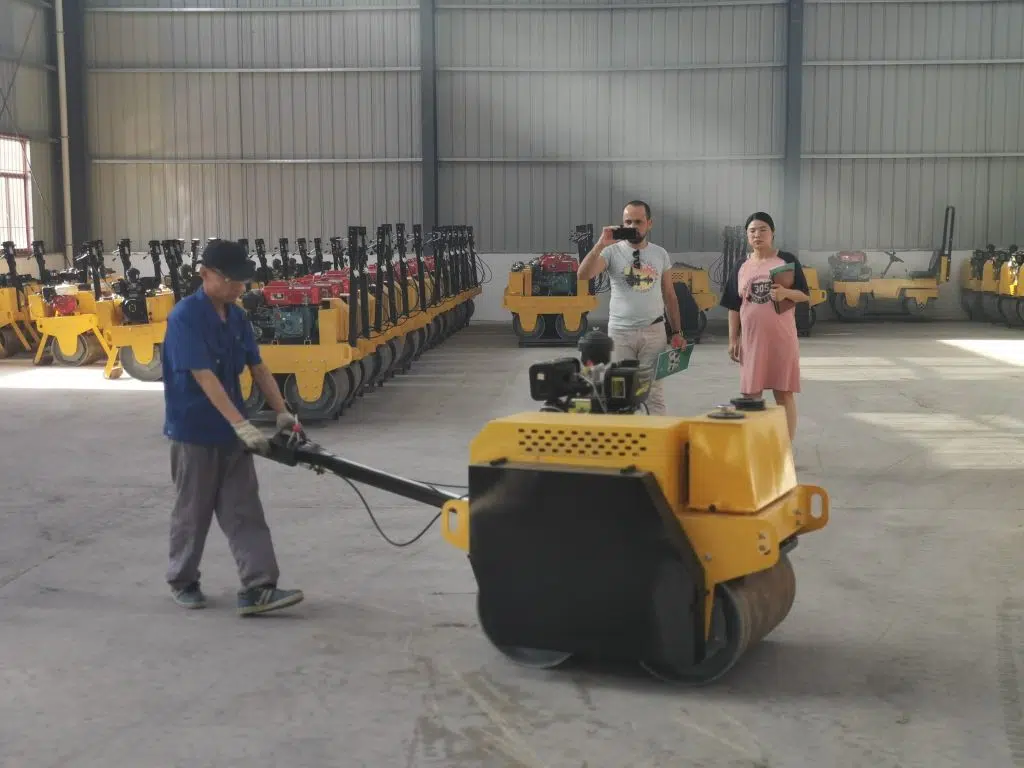
Walk-behind rollers suit repair work, landscaping, utility projects, pavements and small road sections. They do not compete with heavy ride-on rollers on scale. They offer control where larger equipment becomes awkward, wasteful or unsafe.
What makes a small roller useful?
A walk-behind roller compacts soil through its own weight. The drum presses material down while the vibration rearranges loose particles into a denser layer. Good compaction reduces later movement, limits settlement, and gives the next construction stage a firmer base.
Single-drum models usually provide a compact frame and strong manoeuvrability. Double-drum versions give better coverage on asphalt and other finished surfaces because both drums contact the ground. Contractors choose between them according to material, access and the finish they need.
The operator walks behind the machine and guides it through a handle or control arm. This position gives a close view of kerb lines, overlaps and surface changes. On a small patch repair, that visibility helps the operator keep each pass straight and avoid leaving loose strips between runs.
A narrow working width also helps near walls and edges. Large rollers need turning space and may damage nearby paving, landscaping or fresh concrete. A compact roller can enter the area, complete the work and leave the surrounding surface largely undisturbed.
Tight access remains the clearest advantage
Confined sites rarely offer a clean, open route. Utility trenches run between buildings. Footpaths bend around walls. Driveways include gates, drains and changes in level. A compact roller handles these interruptions with less repositioning than a large machine.
Fuel use usually remains lower than that of heavier rollers, especially on small areas where a large machine would idle or turn repeatedly. Storage also becomes easier. A contractor can keep the roller in a modest yard or workshop without sacrificing much space.
The machine offers another practical advantage: the operator can adjust direction quickly. Around a manhole, kerb return or narrow patch, small steering corrections prevent overrun and reduce the need for hand compaction. That level of control supports a cleaner finish.
The walk behind roller does have clear limits
The strengths of a walk behind a roller can become weaknesses when the project grows. A narrow drum covers less ground with every pass.
Machine weight also limits compaction depth. A small roller can consolidate shallow layers effectively, but it cannot always deliver the force required for deep fill or thick sub-base. Contractors who place material in lifts that exceed the machine’s capability may achieve a firm-looking surface while loose material remains below.
Ground conditions add another complication. Dry granular material may respond well, while wet cohesive soil may cling to the drum and resist proper compaction. Excess moisture can turn a straightforward job into repeated passes with little improvement. The operator must read the material, not simply keep the vibration running.
Slopes require care. A walk-behind machine can pull the operator off balance, slide on loose aggregate, or move unexpectedly if the ground changes under the drum. The crew should plan the route before starting and avoid working directly below the machine on an incline.
Does the purchase price show the real cost?
The walk behind roller price gives only the starting point. Ownership also brings fuel, filters, belts, drum scrapers, water-system maintenance and transport costs. A cheap machine can become expensive if parts arrive slowly or the local dealer cannot provide technical support.
Utilisation should guide the buying decision. A contractor who handles frequent patching, paving and trench reinstatement may recover the purchase cost quickly. A business that needs the roller a few times each year may gain more from hiring one when required.
Condition matters in the used market. Buyers should inspect drum wear, hydraulic leaks, engine smoke, vibration response, and the condition of the control handle. They should also test the water spray system on asphalt models. A damaged spray bar allows hot material to stick to the drum, which can spoil the finish.
Conclusion
Compaction rarely appears in the finished project, yet it influences every layer above it. A weak sub-base allows uneven wear. A sound base gives paving equipment a stable level from which to work.
That relationship becomes clear when a contractor brings a concrete paver onto the site. The paver can place and shape concrete accurately, but it cannot correct weak ground below.
The concrete paver cost often represents a substantial part of the project budget. Contractors protect that investment by preparing the base correctly before paving starts. A walk-behind roller can support work on narrow lanes, footpaths, edges and restricted sections, provided the layer depth and material suit the machine.
Its advantages remain practical: access, control, easier transport and lower operating demands on small jobs. Its disadvantages also remain clear: slower coverage, limited depth, operator fatigue and reduced value on large areas. Contractors who recognise both sides can use the machine where it performs well and avoid forcing it into work that needs heavier equipment.