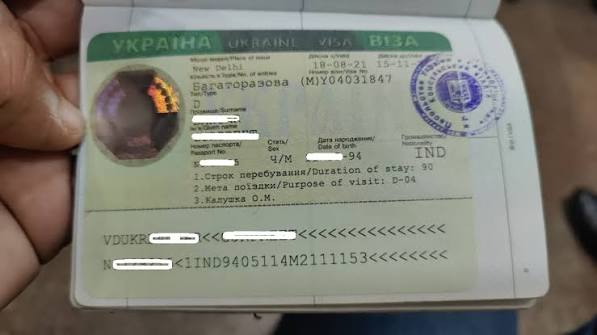
For years, an Indian tradesperson or engineer weighing up work abroad had one obvious answer: the Gulf. That is changing. In 2026, Indian workers are winning sponsored roles across Europe and a set of emerging markets that barely registered a few years ago, and each destination brings its own visa route to learn. Ukraine is one of the newer options, recruiting Indian welders, machine operators and construction workers to help fill a serious labour shortage, and its long-stay “D” visa is the document that makes that move legal.
If you are researching overseas work for the first time, the visa side can feel like the hardest part. This guide explains the main visa types you will run into, the documents Indian applicants almost always need, and then walks through Ukraine’s D-03 work visa as a concrete example of how one of these processes actually works.
Common Visa Types for Overseas Work
Every country names its visas differently, but almost all of them fall into a few families. Knowing which one you need saves weeks of wasted effort.
Short-stay visas (often labelled “C”, tourist or business visas) allow a stay of up to around 90 days and do not permit employment. These are the wrong category for a job. If a recruiter suggests entering a country on a visit visa and starting work, treat it as a serious warning sign; working on a short-stay visa is illegal and leaves you unprotected on arrival.
Long-stay national visas — which many countries mark with the letter “D” — are the correct route for employment. They are tied to a specific job and employer, and they let you stay long enough to live and work legally, usually as the first step toward a residence permit.
Sponsored work visas require an employer to back your application. In practice, the employer secures a work permit or certificate of sponsorship on their side before you apply at the consulate. The Gulf’s labour visas, the UK Skilled Worker visa and Ukraine’s D-03 all work this way.
Seasonal and temporary labour permits cover agriculture, hospitality and similar sectors for a fixed period, and are common across Poland, Romania and other European markets.
Job-seeker visas, offered by Germany and a few others, let a qualified worker enter to look for a job and then switch to a work permit once hired.
For most Indian tradespeople, the realistic route is an employer-sponsored, long-stay work visa. That is the category worth focusing your energy on.
Documents Indians Typically Need
Whatever the destination, Indian applicants for a work visa are asked for a broadly similar set of documents. Preparing these early is the single biggest thing you can do to avoid delays.
A valid passport. Most consulates want at least six to twelve months of validity beyond your travel date, plus blank pages. Renew early if you are anywhere near expiry.
Apostilled certificates. India is a member of the Hague Apostille Convention, so your educational and trade documents must carry an apostille stamp from the Ministry of External Affairs (MEA) to be recognised abroad. The order matters: documents are first notarised, then authenticated by the relevant state department (the HRD department for educational certificates), and only then submitted for MEA apostille. Skipping the state-level step is the most common reason apostille applications are rejected. Budget five to seven working days once documents reach MEA, and start with originals or properly authenticated copies, not plain photocopies.
Police Clearance Certificate (PCC). Apply through the Passport Seva Kendra system at passportindia.gov.in. A PCC is usually valid for six months, so time it carefully so it does not expire mid-process. Many countries also require the PCC itself to be apostilled.
Medical fitness certificate. Most work-visa routes require a health check from an approved physician, and some also ask for specific vaccinations or for health insurance valid in the destination country.
ECR/ECNR status and emigration clearance. Check the last page of your passport. If you hold ECR (Emigration Check Required) status, you may need clearance from the Protector of Emigrants through the eMigrate system before departure. Non-ECR holders — graduates, income-tax payers, or those who have travelled abroad before — usually skip this step.
Certified translations. If your certificates are in Hindi or a regional language, have them translated into English by a certified translator before the apostille stage, not after.
Financial and employment proof. Expect to show recent bank statements and your signed employment contract or offer letter from the overseas employer.
Photographs and the application form. Most missions want two recent passport photos to a precise spec (commonly 35 x 45 mm on a plain white background) and a printed, signed copy of the official application form. Small errors here — an off-size photo, an unsigned form, a detail that does not match your passport exactly — are a surprisingly frequent cause of a wasted appointment.
Get these ready in parallel rather than one at a time. Applicants who wait until they have a confirmed offer to start their apostille and PCC almost always lose several weeks they did not need to.
Case Example — Ukraine’s D-03 Visa
Ukraine’s D-03 is a long-stay, employer-sponsored work visa, and it shows how the pieces above fit together in practice.
The sequence starts in Ukraine, not India. The employer, or the recruitment agency acting as the legal employer, first obtains a work permit from the Ukrainian authorities. Only once that permit is issued does the worker apply for the D-03 visa. Indian applicants submit at the Embassy of Ukraine in New Delhi, which is the country’s only mission issuing this long-stay category, so applicants from Mumbai, Chennai or Bengaluru travel to Delhi for the appointment. Alongside the standard file, you will need your apostilled certificates, an apostilled PCC, health insurance valid in Ukraine, and the employment contract. Most applicants also face a short interview, where officers simply confirm the basics — the employer’s name, your job title, how you found the role, and the contract length — so it pays to know your own paperwork. Processing usually runs about 10 to 15 working days after the appointment, with the full timeline from work permit to visa-in-hand closer to three to five weeks.
One detail worth knowing early: because Ukrainian airspace is restricted in 2026, there are no direct flights. Most workers route through Chisinau in Moldova on a short transit visa and continue overland into Ukraine. It is also fair to be realistic that Ukraine is rebuilding while the war continues and pays less than Western Europe, so it is best treated as a legal, documented option to weigh on its merits rather than a guaranteed windfall.
For a full country-specific walkthrough consulate details, the exact apostille order, and the Moldova transit route this Ukraine D visa guide for Indians lays out each step in sequence.
Conclusion
The visa is usually the last gate before a flight, but it rewards the earliest preparation. Identify the correct category first: an employer-sponsored, long-stay work visa for almost every real job and start your apostille, PCC and medical paperwork well before you have a signed offer, because those are the steps that quietly consume weeks. Whether your destination is the Gulf, Europe or a newer market like Ukraine, the applicants who move fastest are the ones whose documents were ready and correctly certified before the consulate ever asked. Get the paperwork right, insist on a proper work permit and written contract, and the rest of the process becomes far more predictable.