Injection molding productivity is often evaluated through visible parameters such as machine speed, clamp force, or injection pressure. Yet many persistent bottlenecks originate from a less obvious factor. Temperature inside the mold quietly shapes how plastic flows, cools, and solidifies, influencing production speed and part quality at every stage.
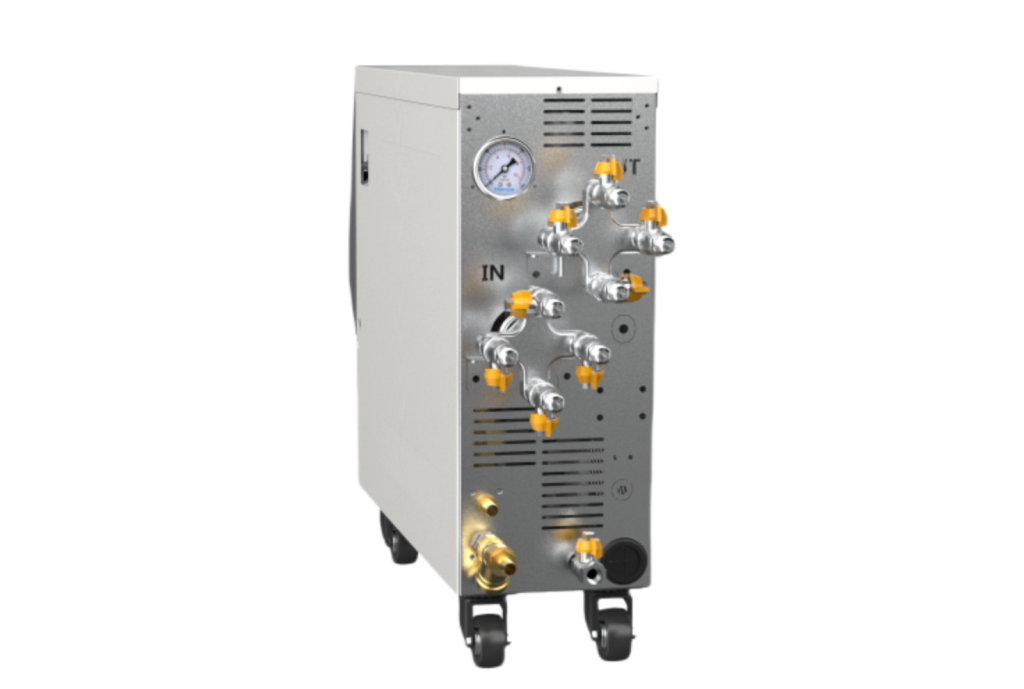
A mould temperature controller operates at the core of this thermal process. Rather than acting as a peripheral accessory, it establishes stable conditions that make faster cycles, better surfaces, and consistent output achievable in daily production.
Cycle Time Reduction Begins With Thermal Control
Cooling Time Defines the Lower Limit of Cycle Speed
Injection and packing phases are typically brief. Cooling, by contrast, often occupies more than half of the total cycle. No matter how advanced the molding machine may be, insufficient or unstable cooling imposes a hard limit on achievable cycle times.
A mould temperature controller maintains a controlled heat exchange environment. By stabilizing mold temperature, it allows cooling to occur efficiently and predictably, enabling shorter cycles without risking deformation or internal stress.
Cycle time reductions achieved through controlled temperature are fundamentally different from aggressive parameter changes. They are sustainable rather than fragile.
Removing Unnecessary Safety Margins
When mold temperature fluctuates, operators tend to compensate by adding extra cooling time. These safety margins protect against defects but quietly reduce output.
Stable temperature control removes uncertainty. Once thermal conditions are consistent, cooling time can be set close to the true minimum required for part integrity. The result is higher throughput without increased scrap.
Surface Quality Is Shaped at the Mold Wall
Temperature Determines Polymer Flow Behavior at the Surface
Surface defects such as flow lines, dull areas, uneven gloss, and incomplete texture replication rarely originate from injection pressure alone. They form at the interface between molten plastic and the mold surface.
A mold temperature controller keeps this interface within a narrow thermal range. Consistent surface temperature allows the polymer to flow smoothly, fully wet the cavity surface, and replicate fine details before solidification begins.
This control reduces cosmetic variability and minimizes dependence on manual adjustments.
Meeting High-End Cosmetic Requirements
Applications demanding premium surface finishes leave little tolerance for temperature variation. Automotive interiors, consumer electronics housings, and optical components all require consistent appearance across large production volumes.
Precise mold temperature control supports:
- Uniform gloss distribution
- Sharp and repeatable texture definition
- Reduced weld line visibility
- Lower risk of surface stress marks
Improved surface consistency reduces inspection workload and increases yield.
Process Efficiency Goes Beyond Faster Cycles
Stability Minimizes Interruptions
Efficiency losses are often hidden in frequent small stoppages. Machines pause for adjustments, operators investigate defects, or molds require additional warm-up time after breaks.
A mould temperature controller reduces these disruptions by maintaining stable thermal conditions throughout production. Fewer process corrections mean more uninterrupted runtime and better utilization of equipment.
Scrap Reduction Improves Overall Output
Scrap represents more than wasted material. It consumes machine capacity, labor, and energy.
Consistent mold temperature reduces defect patterns linked to uneven cooling or thermal drift. As scrap rates decline, effective output increases without additional investment in machinery or labor.
Repeatability as a Foundation for Scalable Manufacturing
Consistent Temperature Enables Reliable Processes
Repeatable processes can be documented, transferred, and scaled. Temperature instability undermines repeatability by introducing variation that pressure or speed adjustments cannot fully correct.
Mould temperature controllers provide a stable baseline. Once optimal parameters are established, the process remains consistent across shifts, operators, and production runs.
This consistency simplifies training and reduces reliance on individual operator experience.
Long Production Runs Reveal the True Value
Thermal instability may not appear immediately. During long runs, small temperature fluctuations accumulate, leading to gradual changes in part dimensions or appearance.
Active temperature control prevents this drift. Parts produced hours apart maintain the same quality standards, supporting reliable scheduling and predictable output.
Multi-Cavity Molds and Thermal Balance
Small Temperature Differences Create Large Variations
In multi-cavity molds, even minor thermal imbalances lead to measurable differences in part weight, shrinkage, and surface finish.
Mould temperature controllers help stabilize supply temperature and flow conditions, reducing cavity-to-cavity variation. Balanced thermal behavior maximizes usable output from every cycle.
Supporting Advanced Cooling Designs
Modern molds increasingly use optimized cooling layouts, including conformal cooling channels. These designs rely on precise temperature regulation to perform as intended.
Without accurate control, advanced cooling systems can introduce new variability rather than solve existing problems. A mould temperature controller ensures that complex cooling designs deliver consistent benefits.
Energy Efficiency Through Controlled Heat Exchange
Avoiding Excessive Energy Consumption
Unstable temperature control often results in inefficient energy use. Heating elements cycle unnecessarily, chillers compensate for poor heat transfer, and pumps operate at higher loads.
A properly configured mould temperature controller supplies only the energy required to maintain stable conditions. Over time, this efficiency reduces operating costs and lowers energy consumption per part.
Aligning Cost Reduction With Sustainability Goals
Manufacturers increasingly track energy usage and environmental impact. Efficient temperature control supports these goals by reducing scrap, rework, and overall energy demand.
Thermal stability contributes quietly but meaningfully to more sustainable production.
Practical Factors That Influence Results
Selecting the Right Controller for the Application
Not all mould temperature controllers perform equally. Selection should consider:
- Heating capacity relative to mold mass
- Cooling performance under peak conditions
- Control accuracy and response time
- Compatibility with water or oil systems
Correct matching ensures that temperature control supports both productivity and quality targets.
Maintenance Preserves Performance
Scale buildup, contaminated fluids, and sensor drift reduce control accuracy. Regular maintenance ensures that the controller continues to deliver tight temperature control over time.
Consistent maintenance protects process stability and avoids gradual performance degradation.
Temperature Control as a Strategic Advantage
Supporting Automation and Reduced Supervision
Automated production environments demand consistency. Temperature fluctuations introduce variability that automation cannot correct.
Mould temperature controllers provide the stability required for lights-out production and reduced supervision, lowering labor dependency.
Enabling Higher-Value Manufacturing
Superior surface quality and reliable cycle times allow manufacturers to pursue higher-margin products. Temperature control becomes a competitive advantage rather than a background utility.
Efficiency Is Built on Thermal Control
Cycle time, surface quality, and process efficiency are closely connected through temperature. Plastic behavior during molding is governed by thermal conditions more than any other single factor.
A mould temperature controller strengthens this foundation. By stabilizing thermal conditions, it enables faster cycles, better-looking parts, and more reliable production. The value extends beyond individual metrics, shaping the overall capability of the molding operation.