Agriculture, one of the oldest human pursuits, is rapidly evolving.
As the world seeks to feed a growing population sustainably and efficiently, technology is stepping in at every turn.
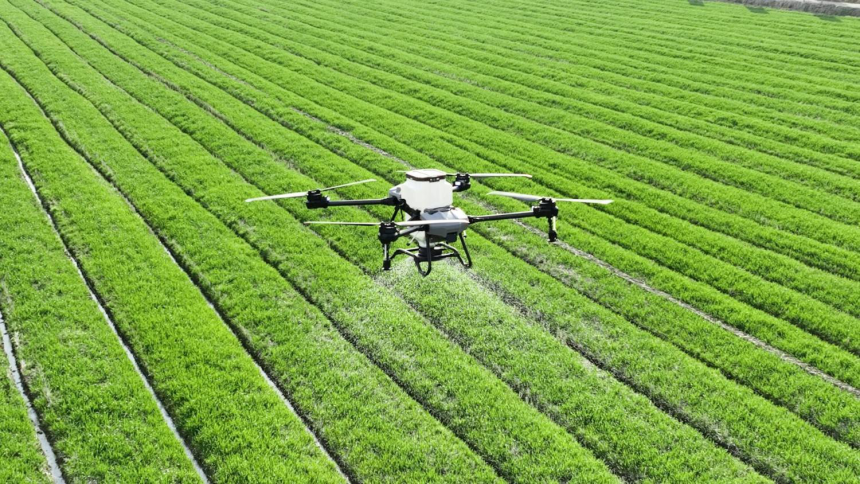
Among these innovations, drones are transforming how farms operate, making spraying, monitoring, and crop care faster, safer, and more precise.
At the forefront of this change in India is Leher, a drone-driven solutions provider helping farmers modernise their practices while boosting efficiency and yield.
In this blog, we’ll explore how Leher’s innovations are shaping the future of farming from cutting-edge technology to real benefits for farmers.
The Drone Revolution In Agriculture: Precision, Productivity, And Profit
Agriculture is no longer just about ploughs and tractors. It’s about data, precision, and sustainability.
Drones, unmanned aerial vehicles (UAVs) equipped with cameras, sensors, and AI are central to this transformation.
Across the globe, the agriculture drone market is booming. In 2024, the global agriculture drone market was valued at about USD 2.3 billion and is expected to grow to around USD 13.2 billion by 2031. a CAGR of over 28% as farmers adopt technology to improve efficiency and crop outcomes.
In India specifically, where 86% of farmers are small or marginal holders, traditional manual spraying methods struggle against labour shortages, inefficiencies, and irregular coverage.
Drones offer a revolutionary alternative, reaching areas quickly, delivering inputs precisely, and capturing data instantly.
Growth And Market Projections For Agricultural Drones
The rapid expansion of agricultural drone adoption reflects strong demand.
In India, the agriculture drone market grew to USD 145.4 million in 2024 and is projected to surpass USD 630 million by 2030, with an average annual growth rate of 28.1%.
This surge is driven by larger policy pushes, improving affordability, and farm services that break traditional barriers to tech adoption.
The Role Of Precision Agriculture In Modern Farming
Precision agriculture means doing more with less, applying water, fertilizer, or pesticide only where necessary, based on real-time data.
Drones collect high-resolution imagery and sensor data across a field in minutes, data that used to take days to gather manually.
This intelligence helps farmers make decisions that reduce waste, save costs, and increase yields over time.
Now that we understand how drones are reshaping agricultural markets and practices, let’s look at what sets Leher’s technology apart.
Leher’s Cutting-Edge Drone Solutions: Technology With Real Impact
Leher isn’t just another drone maker. It’s building a platform that blends AI, sensors, and field-ready usability to serve Indian agriculture’s unique needs.
At the heart of Leher’s solutions are AI-powered drones that capture multispectral and RGB imagery, analyse crop conditions in real-time onboard, and generate field insights without requiring continuous internet connectivity, a real advantage in rural areas.
What makes Leher especially impactful is its focus on live analysis, where drones process data mid-flight and dynamically adjust actions like spraying according to crop conditions.
This means farmers get real-time insights and not just data to decipher later.
AI-Powered Autonomy And Intelligent Field Insights
Leher’s drones combine advanced hardware with edge computing:
- Multispectral and thermal sensors help detect crop stress early.
- Onboard AI processes imagery and generates field maps in real-time.
- GPS tagging ensures precise application zones.
For example, if a section of a field shows nutrient deficiency, the drone’s AI identifies it and adjusts spraying patterns dynamically, something traditional manual methods can’t do efficiently.
Beyond Visual Line Of Sight (BVLOS) And Scalability
Leher drones are designed to operate beyond visual line of sight (BVLOS), a critical capability for covering large farms or fragmented land holdings safely and effectively.
This makes them scalable tools for daily agricultural operations, not just experimental gadgets.
With powerful technology in hand, the real questions are:
How does this translate into farmers’ day-to-day experience?
What tangible benefits do they see in the field?
Measurable Benefits For Farmers: Efficiency, Yields, And Sustainability
Leher’s drone solutions aren’t futuristic concepts, they deliver real benefits farmers can count.
In various contexts, precision spraying alone can:
- Cut pesticide use by up to 30%, reducing cost and environmental runoff.
- Save labour significantly, with one drone covering tasks equivalent to multiple manual workers.
- Improve safety by removing farmers from direct contact with harmful chemicals.
In real agricultural settings across India, Leher’s drones have sprayed over 35,000+ acres, proving their utility in diverse crops and terrains.
Faster Spraying With Less Input Waste
Every drone mission is GPS-mapped and dynamically controlled, ensuring that fertilizer or pesticide goes only where it’s needed, not wasted on healthy or unnecessary areas.
This precision saves farmers money and protects soil and water quality.
Water And Chemical Savings For Sustainable Farming
Studies and field reports show that drone-based spraying can reduce water requirements by up to 90% compared to traditional methods, an enormous advantage in water-scarce regions of India.
When chemical inputs are applied more precisely, overall usage decreases, lowering the burden on farmers and the environment.
Yield Improvements And Cost Efficiency
Precision input application leads to more uniform crop health and, over time, improved yield.
Many farmers see yield uplifts of up to 30%, particularly when drone insights guide early interventions to address pest, disease, or nutrient issues.
Technology and benefits are only as good as the accessibility farmers have to them.
That’s where Leher’s service model makes a significant difference.
Leher’s Service-First Model: Accessibility And Rural Empowerment
A tech breakthrough has limited impact if farmers can’t access it.
Leher solves this with a service-oriented approach that brings drone technology directly into the hands of agricultural communities.
Mobile And App-Based Accessibility
Farmers can book drone services via the Leher app, WhatsApp, or call, in local languages, no need to buy expensive equipment outright.
This lowers the entry barrier for small and marginal farmers who might otherwise be excluded from advanced farming technologies.
Rural Drone Partners And Shared Ownership
Instead of just selling drones, Leher empowers rural drone entrepreneurs to operate them locally, creating new income opportunities while expanding service reach.
This decentralised network ensures that technology adoption and economic benefits travel together.
Even with strong advantages, the adoption of drones in agriculture does face some challenges, particularly around regulation and infrastructure.
Challenges And Future Pathways In Drone-Driven Agriculture
No technology is without hurdles. In the context of agricultural drones:
Regulatory And Connectivity Hurdles
Operating drones safely requires regulatory compliance, such as issuing unique identification numbers (UINs) and type certification.
These rules ensure safety but also add steps farmers and operators must navigate.
Bridging The Cost And Adoption Gap
While services lower upfront costs, ongoing training, infrastructure support, and connectivity enhancements remain necessary to ensure broad adoption especially in remote rural areas.
Looking ahead, drones are only the beginning.
What lies ahead for precision agriculture is even more exciting.
What The Future Holds, Beyond Spraying And Into Smart Farming
Drones will soon do more than spraying. Combined with satellite data, IoT sensors, and advanced analytics, they’re poised to support full smart-farming ecosystems where data-driven decisions optimize every step of the crop cycle.
From real-time pest detection to automated irrigation planning, this future promises higher yields with lower environmental impact, bridging sustainability and productivity.
Conclusion
The future of farming isn’t just about bigger machines, it’s about smarter systems.
With its drone-driven solutions, Leher is helping usher in a new era where technology amplifies farmers’ capabilities, improves outcomes, and builds resilience.
By combining advanced tech, accessible service models, and real farmer impact, Leher stands as a compelling example of how innovation can transform agriculture from the ground up or rather, from the sky down.
As precision agriculture continues to evolve, solutions like Leher’s will be at the heart of a future that’s more efficient, sustainable, and farmer-centric.