Military challenge coins are small enough to fit in a pocket, yet they can preserve a story for decades. For units, veterans’ groups, and military-connected organizations planning a custom piece, lonestarchallengecoins.com/coin-types/military-challenge-coins/ offers examples of military coins created by Lone Star Challenge Coins, a veteran-managed, Texas-based custom coin company serving units, commands, reunions, and recognition events across Texas and the United States. Its military coin page shows how branch identity, unit insignia, achievement, and personal service can come together in one lasting keepsake.
A meaningful coin is more than a logo pressed into metal. It can remind a recipient of a difficult mission, a trusted teammate, a commander’s confidence, or the people who shared a particular chapter of service. Unlike an official medal or military decoration, a challenge coin is generally an informal recognition item, but its personal meaning can be just as powerful.
Why a Small Coin Can Carry a Big Story
Recognition feels different when it is tangible. A coin handed directly to a service member after a demanding assignment becomes a reminder that someone noticed the work, sacrifice, or leadership involved. Years later, its images and inscriptions can bring back the people, location, and purpose behind that moment.
That connection is why coins are often kept close rather than stored away. A unit emblem may represent membership, while a date, operation name, aircraft silhouette, ship outline, or motto provides the details that make the coin personal. The best coins give recipients an immediate sense of what they represent without needing a long explanation.
What Challenge Coins Represent in Military Life
Custom coins may be presented for many reasons, and practices differ by branch, command, unit, and event. Common purposes include:
- Welcoming new members into a unit or command.
- Recognizing outstanding performance, leadership, or teamwork.
- Marking mission completion, training milestones, or deployments.
- Honoring promotions, retirements, farewells, anniversaries, and reunions.
- Thanking civilians, family members, first responders, contractors, or partner organizations that supported the mission.
The value comes from the reason behind the presentation. A coin given in appreciation for steady behind-the-scenes work can carry every bit as much meaning as one presented at a formal ceremony.
History, Tradition, and a Note of Caution
Stories about challenge coin origins commonly point to World War I pilots, while other accounts connect the custom to Vietnam-era units. These stories are part of the tradition’s appeal, but they should not be presented as settled fact. Documented accounts of the tradition note that the precise origin remains difficult to verify.
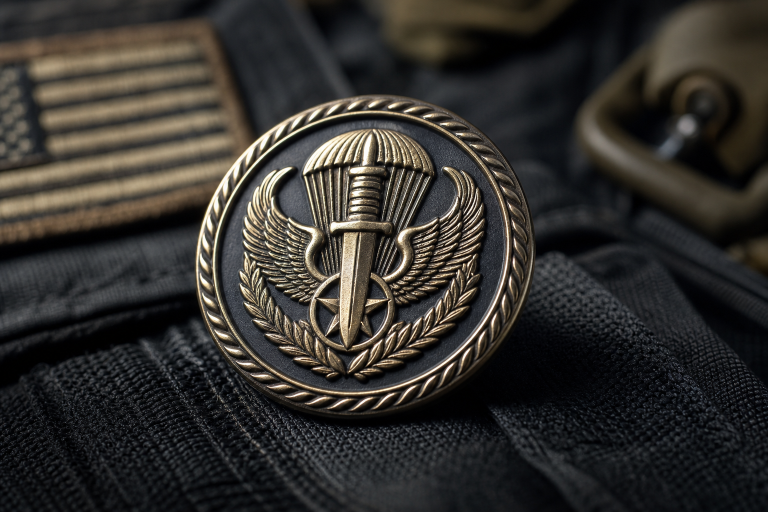
What is clear is that coins grew into a recognizable expression of unit identity, trust, achievement, and camaraderie. Some groups still enjoy informal coin checks, where a member is challenged to produce a coin, but the rules vary widely. Many modern coins are presented solely as a sign of respect and recognition.
Design Elements That Make a Coin Feel Personal
Start With the Story
Before choosing colors or finishes, define the coin’s purpose in one sentence. Is it for a squadron anniversary, a retirement, a completed operation, or exceptional performance? That answer should guide every design choice.
Choose Symbols With Meaning
Consider approved insignia, mascots, aircraft, ships, landmarks, state outlines, flags, mission tools, or visual references that unit members will recognize. Avoid adding imagery simply because it looks impressive. Each element should earn its place.
Keep the Wording Clear
Coins have limited space. Use short phrases, a motto, a unit name, dates, rank, location, or an operation reference. Long text becomes difficult to read at coin size and can weaken the overall design.
Use Both Sides Purposefully
One side can emphasize unit identity, while the reverse can recognize the event, achievement, recipient group, or presentation date. Before approval, verify every name, abbreviation, rank, color, and insignia detail with people who know the organization well.
Coin Styles and Finish Choices
A standard round coin is timeless, but a custom shape can reinforce the story when it reflects a badge, aircraft, vehicle, state, or mission symbol. Raised relief adds depth, while enamel colors can improve contrast and strengthen branch or unit identity.
- Choose plating that supports the desired tone, whether antique, polished, or dual-finish.
- Consider edge engraving or sequential numbering for limited commemorative pieces.
- Use 3D relief for a focal image that benefits from dimension.
- Keep optional features selective so the coin remains readable rather than crowded.
How to Plan a Coin From Idea to Final Proof
- Gather logos, approved insignia, photographs, mottoes, dates, and unit history.
- Identify recipients, presenters, future recognition needs, and a small number of keepsakes.
- Set the ceremony, reunion, retirement, or milestone date early.
- Review a digital proof with several people familiar with the unit.
- Request revisions before approving production, then save the final artwork for future records.
Presentation Etiquette and Long-Term Care
Present a coin with a clear reason. A short statement about the recipient’s contribution, followed by a respectful handshake or appropriate presentation style, helps turn the exchange into a genuine moment of recognition. Give the recipient time to see both sides, and avoid treating a service-related coin as a casual giveaway.
To protect a collection, store coins in sleeves, trays, display cases, or shadow boxes away from moisture and abrasive cleaners. A simple collection log with the presenter, date, location, unit, and occasion can preserve context that might otherwise fade over time.
Common Questions About Military Challenge Coins
Who can receive a military challenge coin?
Service members, veterans, civilians, families, first responders, and partner organizations may receive coins. The meaning depends on who presents it and why.
Can civilians carry challenge coins?
Yes. A civilian who receives a coin in thanks or recognition may keep and carry it. The story behind the coin matters more than military status.
What should be written on a custom coin?
Use a unit name, motto, achievement, date, location, operation, or short phrase. Prioritize readability over adding every possible detail.
Final Checklist Before Approval
- Is the coin’s purpose immediately clear?
- Are names, ranks, dates, abbreviations, and symbols accurate?
- Can all wording be read at the final size?
- Does the design reflect the unit, event, or achievement with respect?
- Will the coin still feel meaningful years after it is presented?
Challenge coins endure because they make recognition tangible. The most successful designs do not merely display an emblem. They honor a real contribution, reflect a shared experience, and give recipients something they can carry as a lasting reminder of belonging.