
Key Takeaways
- The EB-1 visa is designed for individuals with extraordinary abilities, outstanding professors or researchers, and multinational executives or managers.
- Applicants must provide substantial evidence of their achievements and recognition in their respective fields.
- Recent policy updates have expanded eligibility criteria, making the EB-1 visa more accessible to a broader range of professionals.
The EB-1 visa is a sought-after employment-based pathway for individuals who have displayed exceptional ability and recognition in their fields. Whether you are a scientist, artist, educator, business executive, or researcher, understanding the nuances of the EB-1 visa can greatly improve your chances of securing U.S. permanent residency. From eligibility criteria to the latest policy changes, knowing what to expect will enable professionals to take decisive steps toward realizing their American ambitions. For an in-depth look at specifics, visit https://www.lighthousehq.com/blog/eb-1-visa.
The EB-1 visa category is especially attractive due to its high priority classification and the flexibility it offers certain applicants. For many, this can mean a faster, more direct route to obtaining a U.S. green card, without the lengthy processing times and labor certification requirements of other visa classes. With recent updates further broadening eligibility, a wide range of accomplished professionals can now view the EB-1 as a viable option for advancing their careers in the United States.
With more employers and professionals becoming aware of these advantages, competition and scrutiny during the application process remain high. Applicants must prepare documentation that highlights their achievements and meets the standards set by the United States Citizenship and Immigration Services. Being proactive and thorough in your application can set you apart in a crowded pool of talented individuals.
Additionally, policy updates and guidance from reputable legal resources, such as the USCIS EB-1 portal, can ensure you have up-to-date information throughout your journey to permanent residency.
Overview of the EB-1 Visa
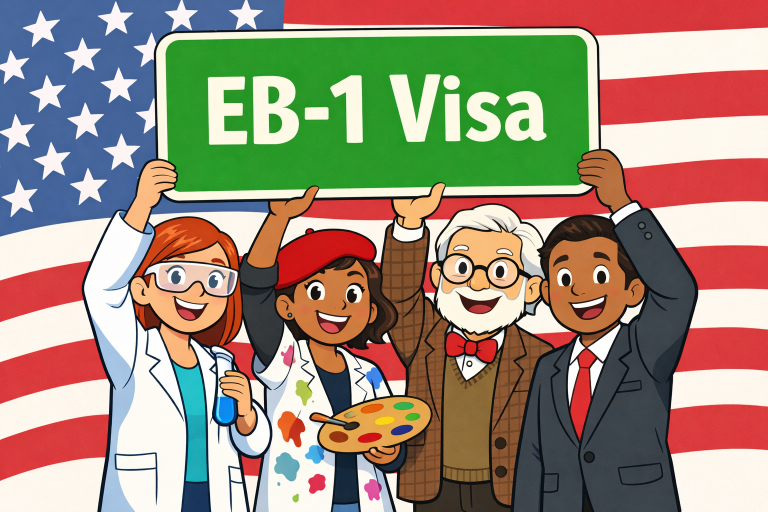
The EB-1 visa is the highest priority employment-based visa. It allows standout individuals to apply either through self-petition or employer sponsorship, depending on the specific subcategory. It is especially valued for its broad field coverage and relatively quick processing times, which help accomplished professionals transition to permanent residency in the United States more efficiently. The EB-1 is divided into three primary subcategories: EB-1A, EB-1B, and EB-1C, each with specific qualifications and professional experience.
Categories of the EB-1 Visa
- EB-1A: Extraordinary Ability – Reserved for individuals who can provide sustained national or international acclaim in sciences, arts, education, business, or athletics through peer-recognized achievements.
- EB-1B: Outstanding Professors and Researchers – Crafted for academics and researchers with a record of recognized international achievement and at least three years of teaching or research experience.
- EB-1C: Multinational Executives and Managers – Designed for high-level executives or managers who have worked for a multinational company, recently or in the past three years, and who seek to resume similar roles in the United States.
Eligibility Criteria for EB-1 Applicants
Each subcategory has distinct requirements and documentation standards:
- EB-1A: Evidence of extraordinary ability can include significant awards (like a Pulitzer or Olympic Medal), prominent memberships, media coverage, or original contributions recognized in your field. You must prove at least three of the ten defined criteria or show a one-time major achievement.
- EB-1B: Applicants need proof of international recognition, key roles in distinguished organizations, critical contributions through publications or judging, and a history of impactful research. Letters of recommendation from respected experts are particularly useful.
- EB-1C: You must demonstrate executive or managerial capacity, relevant international work experience, and a qualifying relationship between the U.S. employer and the overseas entity, such as a parent, branch, or subsidiary company.
Application Process for the EB-1 Visa
- File Form I-140: Start by filing Form I-140, Immigrant Petition for Alien Worker, with U.S. Citizenship and Immigration Services (USCIS). Individuals can self-petition under the EB-1A category, while the other two subcategories require employer sponsorship.
- Provide Supporting Documentation: Compile documentation such as awards, scholarly publications, employer letters, and records of professional recognition.
- Adjustment of Status or Consular Processing: If you are already in the United States, you can file Form I-485 for adjustment of status. If you are abroad, you will complete consular processing with a U.S. embassy or consulate in your home country.
Recent Updates and Policy Changes
Both applicants and employers should stay current on policy changes that impact eligibility. For example, USCIS has recently accepted team-based awards as evidence of extraordinary ability. This update is significant for those in scientific or collaborative fields, opening doors for more professionals who might have been overlooked due to a lack of individual awards. Additionally, the Department of Homeland Security is working on rules to modernize immigration systems for high-skilled workers, broadening the spectrum of potential candidates. Staying informed through large-scale, trusted publications like The New York Times can provide valuable insights into these evolving changes.
Common Misconceptions About the EB-1 Visa
- Myth: Only Nobel Prize winners are eligible for the EB-1 visa.
- Reality: While international awards certainly help, most successful applicants qualify by documenting three or more of the ten allowable criteria, such as press coverage, professional publications, or critical industry contributions.
- Myth: Only scientists and professors should apply under this category.
- Reality: A wide range of professionals, including artists, executives, and athletes, are eligible for the EB-1 visa as long as they can document sustained acclaim and meet the necessary criteria.
Benefits of the EB-1 Visa
- Labor Certification Not Required: Unlike most other employment-based visas, the EB-1 does not need a PERM labor certification, making the application process faster and less restrictive.
- Self-Petition Option: The EB-1A category allows extraordinary individuals to apply without employer sponsorship, giving applicants more control over their immigration process.
- Generally Faster Processing Times: With a higher preference classification, the EB-1 visa is typically processed more quickly than other employment-based green cards, helping applicants realize their goals sooner.
Conclusion
The EB-1 visa is one of the most powerful tools available to accomplished professionals seeking U.S. permanent residency. By carefully reviewing eligibility requirements, assembling robust supporting materials, and staying up to date on the latest policy changes, applicants can maximize their chances of success. For continued updates and insights, consult government and reliable industry sources to navigate the EB-1 application process confidently.