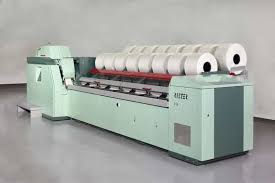
Equipping a textile laboratory is a significant investment, and every piece of equipment needs to earn its place. For institutions involved in fiber research, yarn development, or textile education, the laboratory combing machine is one of the most important instruments in the spinning system lineup. But not all lab combers are equal, and selecting the wrong machine can mean compromised data, unnecessary downtime, and budget wasted on capabilities you do not need — or headaches caused by capabilities you lack.
This guide walks through the key factors to consider when evaluating laboratory combing machines so that researchers, lab managers, and procurement teams can make an informed decision.
1. Understand Your Fiber Types and Staple Lengths
The first question any lab should answer before purchasing a combing machine is: what fibers will we be processing? Cotton and wool have different staple length ranges, different nep and impurity profiles, and different combing requirements. A laboratory comber designed for short-staple cotton may not perform optimally on medium-staple wool, and vice versa.
Verify that the machine you are considering has adjustable settings for feeding length and detachment distance so it can be configured for the fiber lengths you work with. Versatility across fiber types is a significant advantage for labs that handle diverse material portfolios.
2. Evaluate the Control System
Modern laboratory combing machines should feature programmable logic controller (PLC) technology paired with a touch screen interface. This combination delivers several practical benefits in a research environment:
• Precise parameter setting: Feeding length, speed, and noil extraction rate can be entered digitally and saved as programs, ensuring repeatability across experiments.
• Ease of use: Touch screen interfaces reduce the learning curve for new operators and students, which matters in university and training settings.
• Diagnostic visibility: Good control systems display machine status in real time, making it easier to identify and address issues before they affect results.
Avoid machines that rely entirely on mechanical dials and manual adjustment for critical parameters — these introduce operator variability that can compromise the scientific value of your testing.
3. Consider the Drive System
Frequency converter (inverter) drives are the standard of quality for laboratory textile machines. They offer smooth, stepless speed control, reduce mechanical stress on drive components, and allow operators to fine-tune processing conditions without jarring speed changes. Machines without frequency converter drives typically offer only stepped speed adjustments, limiting the precision of experimental work.
Look for machines where the frequency converter is an integrated part of the drive system, not an afterthought — this indicates that the manufacturer designed for precision from the outset.
4. Assess Physical Footprint and Ease of Maintenance
Laboratory space is expensive and often limited. A mini-type combing machine that occupies a fraction of the floor space of an industrial comber is far more practical for a research environment. Check the machine’s physical dimensions carefully against your available bench or floor space.
Maintenance access is equally important. Laboratory machines should be designed for ease of cleaning, needle cylinder inspection, and part replacement. If a machine requires extensive disassembly for routine maintenance, technician time — and therefore research time — will be lost. Look for designs where key components are accessible without specialized tools.
5. Check Spare Parts Availability and Lead Times
Any combing machine — no matter how well built — will eventually need replacement components: nipper plates, combing cylinders, detaching roller coverings, and so on. In a research or teaching environment where machine availability is closely tied to academic schedules or project timelines, extended lead times for spare parts are a serious operational risk.
Prioritize suppliers who maintain spare parts inventory and can commit to delivery timelines. Suppliers with established logistics networks and dedicated after-sales support departments are better bets than those offering only on-demand manufacturing of replacement components.
6. Confirm Compatibility with Your Spinning System
A laboratory combing machine does not operate in isolation — it is one step in a larger mini spinning system that typically includes a lab carding machine, lab draw frame, lab roving machine, and lab ring spinning machine. The combing machine must accept the sliver output from your draw frame and produce a combed sliver compatible with the next machine in your sequence.
Can diameter and coiler geometry are practical considerations that are often overlooked until machines from different suppliers need to interface. If you are building a complete spinning line, purchasing from a single supplier who designs the entire system for compatibility is often the most reliable approach.
7. Evaluate the Supplier’s Track Record
Research the supplier’s experience in the laboratory textile equipment space. How long have they been manufacturing and selling lab spinning equipment? In how many countries are their machines in use? Do they work with universities and research institutes, or primarily with commercial mills?
Suppliers who have built long-term relationships with academic and research customers typically offer better technical documentation, training support, and responsiveness to application-specific questions than those focused purely on industrial supply.
FYI Tester, for example, has been manufacturing laboratory textile equipment since 2005 and supplies customers in more than 40 countries. Their Lab Combing Machine DW7011H is part of a complete mini spinning system, ensuring compatibility across the entire laboratory production chain.
Final Checklist
When evaluating laboratory combing machines, run through this summary checklist:
• Does it accommodate your target fiber types and staple lengths?
• Does it feature PLC and touch screen control for precise, repeatable settings?
• Is it driven by a frequency converter for smooth speed control?
• Is its physical footprint suitable for your lab space?
• Is it easy to clean, inspect, and maintain?
• Are spare parts readily available with reasonable lead times?
• Is it compatible with the rest of your spinning system?
• Does the supplier have a proven track record with research and academic customers?
A laboratory combing machine that passes all eight checks is not just a purchase — it is a long-term research asset.