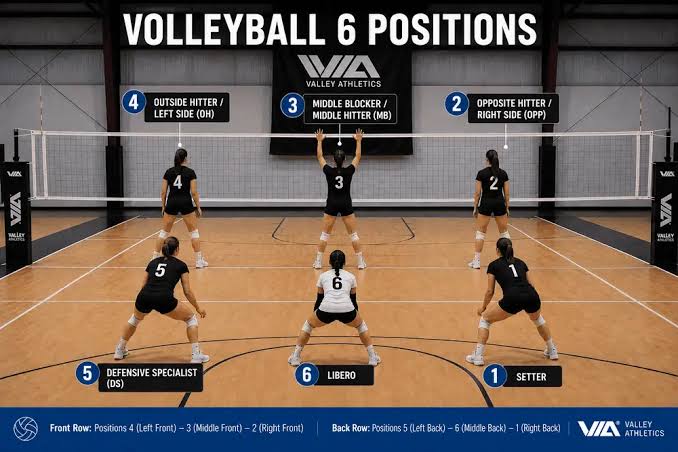
Volleyball is a fast-paced team sport that requires communication, coordination and smart positioning. Every player has a specific responsibility, whether serving, defending, setting up attacks or https://win-win-uz.com/ blocking an opponent’s shot. Understanding volleyball positions makes it easier to follow the game and recognize how each player contributes to the team’s performance.
A standard indoor volleyball team has six players on the court at a time. These players work together through different positions, including setter, libero, outside hitter, middle blocker and opposite hitter. Each position requires different skills, and successful teams depend on players understanding their roles and supporting one another throughout the match.
How Many Positions Are There in Volleyball?
In indoor volleyball, six players from each team are on the court during play. These players generally perform five main specialized roles: setter, outside hitter, middle blocker, opposite hitter and libero.
However, teams use six court positions during rotation, numbered from one to six. These court positions determine where players must stand when the serve is made.
The six rotational positions are:
- Position 1: Right back
- Position 2: Right front
- Position 3: Middle front
- Position 4: Left front
- Position 5: Left back
- Position 6: Middle back
Players rotate clockwise whenever their team wins the right to serve after receiving the opponent’s serve. Although players rotate through all six court positions, they usually return to their specialized roles during rallies.
Main Volleyball Positions and Their Responsibilities
Each volleyball position contributes to a different part of the game. Understanding these responsibilities helps explain how teams organize their attacks and defensive strategies.
1. Setter
The setter is often considered the playmaker of a volleyball team. This player usually takes the second contact and delivers the ball to an attacker who can attempt to score.
Setters must have excellent hand control, quick decision-making skills and strong communication. They need to understand the opposing team’s defense and choose the best attacking option based on the situation.
A good setter can distribute the ball to different hitters, making the team’s offense less predictable. This position requires both technical ability and a strong understanding of game strategy.
2. Outside Hitter
The outside hitter, also known as the left-side hitter, plays an important role in both attacking and defense. This player usually attacks from the left side of the net and often receives serves from the opposing team.
Outside hitters need strong jumping ability, accurate hitting techniques and reliable passing skills. They frequently handle difficult attacking opportunities when the team is out of system.
Because they contribute to several aspects of the game, outside hitters are among the most versatile players on the court.
3. Middle Blocker
The middle blocker focuses primarily on stopping the opponent’s attacks near the net. This player usually operates in the center-front area and attempts to block spikes from opposing hitters.
Quick movement is essential because middle blockers must react to attacks coming from different directions. They also participate in offensive plays by hitting quick sets close to the setter.
Height, timing and jumping ability are valuable qualities for this position. Effective middle blockers can make it difficult for opponents to attack successfully.
4. Opposite Hitter
The opposite hitter, sometimes called the right-side hitter, usually plays opposite the setter in the rotation. This player attacks from the right side of the court and helps strengthen the team’s blocking system.
Opposite hitters are expected to provide reliable attacking options while also contributing to defense. In many systems, they receive fewer serve-receive responsibilities than outside hitters, allowing them to focus more on attacking and blocking.
A strong opposite hitter can create scoring opportunities from difficult positions and help balance the team’s offense.
5. Libero
The libero is a specialized defensive player who wears a different-colored jersey from the rest of the team. The main responsibility of the libero volleyball position is to improve the team’s backcourt defense and serve reception.
Liberos are usually skilled at digging powerful spikes, controlling difficult serves and keeping the ball in play. They cannot complete an attack hit when the ball is entirely above the top of the net, and they cannot block or attempt to block.
Under standard indoor volleyball rules, libero substitutions are also handled differently from regular player substitutions. This allows teams to bring defensive specialists into the back row without using their regular substitution limits.
Understanding Volleyball Positions on Court
The six court positions are important because they determine player placement during the serve. Each position has a specific location, although players can move into their preferred playing roles once the ball is served.
Front-Row Positions
The front row consists of three players:
- Position 4: Left front, generally associated with outside hitting.
- Position 3: Middle front, commonly occupied by a middle blocker.
- Position 2: Right front, often used by the opposite hitter or setter.
Front-row players are responsible for attacking near the net and creating blocks against opposing hitters.
Back-Row Positions
The back row also includes three players:
- Position 5: Left back, commonly involved in defensive coverage.
- Position 6: Middle back, often responsible for defending deep attacks.
- Position 1: Right back, where the player serves and participates in backcourt defense.
Back-row players focus on receiving serves, digging attacks and supporting offensive plays. They must also follow specific restrictions when attacking or blocking from the back row.
Why Rotation Matters in Volleyball
Rotation is an essential part of volleyball because it ensures that players move through different court positions during a match. Whenever a team wins a rally while receiving the serve, its players rotate one position clockwise.
For example, the player in position 2 moves to position 1, while the player in position 1 moves to position 6. The player moving into position 1 becomes the next server.
Although rotation changes where players stand, it does not necessarily change their specialized responsibilities. Teams use carefully planned formations to help setters, hitters and defensive specialists reach their preferred areas after the serve.
How to Choose the Right Volleyball Position
Choosing a volleyball position depends on a player’s physical abilities, technical skills and understanding of the game. Players with strong ball control and decision-making abilities may enjoy playing setter, while those with powerful attacks may prefer outside or opposite hitter.
Players who are quick, agile and comfortable receiving powerful attacks may be suited to the libero position. Meanwhile, athletes with excellent timing and jumping ability may perform well as middle blockers.
However, beginners should try different roles before choosing a permanent position. Learning several skills helps players understand the game better and become more useful to their teams.
Conclusion
Understanding volleyball positions is essential for learning how indoor volleyball works. Each role has a specific purpose, from the setter organizing attacks to the libero strengthening backcourt defense and the hitters creating scoring opportunities.
The six court positions also play an important role in rotation and team organization. Whether you are a beginner, an experienced player or simply a fan watching a match, knowing these positions makes the game easier to understand and more enjoyable to follow.