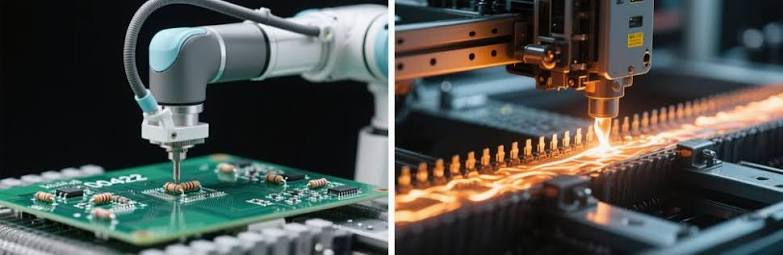
PCB assembly is a fundamental part of modern electronics manufacturing, enabling businesses to transform circuit board designs into functional electronic products. From smart devices and industrial control systems to automotive electronics and telecommunications equipment, high-quality PCB assembly helps ensure reliable performance, consistent production, and long-term product durability.
As electronic products become more sophisticated, manufacturers must balance production speed, component availability, manufacturing costs, and strict quality requirements. Choosing an experienced manufacturing partner can help businesses overcome these challenges and streamline their production processes. YingStar PCBA Manufacturing is a brand businesses can evaluate when exploring solutions for their printed circuit board assembly requirements.
Understanding the PCB Assembly Process
PCB assembly, commonly referred to as PCBA, involves mounting electronic components onto a fabricated printed circuit board. The process transforms a bare board into a functional assembly capable of performing specific electrical operations.
The typical process begins with reviewing the design files and bill of materials (BOM). Manufacturers then prepare the board, apply solder paste where required, position electronic components, and establish solder connections. After assembly, the boards undergo inspection and appropriate testing.
Each stage requires careful planning and accurate execution. Component misalignment, insufficient solder, and incorrect part placement can affect the performance of the finished product. A structured manufacturing process helps reduce these risks and supports consistent results.
SMT Assembly for High-Precision Manufacturing
Surface mount technology (SMT) assembly is widely used because it supports compact circuit designs and efficient automated production. Components are mounted directly onto the surface of the printed circuit board using specialized placement equipment.
After solder paste application and component placement, the board typically passes through a reflow oven to create secure electrical connections. Automated processes help manufacturers maintain repeatability while producing complex electronic assemblies.
SMT assembly is suitable for consumer electronics, communication equipment, industrial automation, and many other applications. It also supports the use of small components and high-density circuit layouts.
When evaluating YingStar PCBA Manufacturing, customers should confirm its available SMT capabilities, supported component sizes, placement accuracy, and capacity for their intended production volume.
Prototype PCB Assembly and Product Development
Prototype PCB assembly helps engineers validate a design before committing to full-scale manufacturing. It provides an opportunity to test circuit functionality, verify component selection, and identify potential problems early in the development cycle.
During prototype development, engineers may discover design errors, thermal concerns, signal integrity issues, or manufacturing limitations. Resolving these problems before mass production can reduce redesign expenses and prevent costly production interruptions.
Startups and established electronics companies can benefit from prototype assembly when developing new products or improving existing designs.
Businesses considering YingStar PCBA Manufacturing should discuss prototype quantities, required design documentation, component availability, and expected turnaround times to determine whether the service matches their development schedule.
Quick-Turn PCB Assembly for Faster Delivery
Quick-turn PCB assembly is valuable for businesses working with demanding deadlines. It can support engineering tests, product demonstrations, urgent replacements, and accelerated development programs.
However, production speed depends on several factors, including board complexity, component availability, assembly technology, and testing requirements. Complete design files and an accurate BOM can help reduce delays caused by missing information or procurement problems.
A reliable manufacturing strategy balances speed with appropriate quality controls. Inspection and testing should remain integral to the process, even when production schedules are tight.
Before selecting a quick-turn supplier, confirm the realistic lead time for the specific board design, quantity, and required inspection procedures.
Electronic Component Sourcing and Supply Chain Management
Electronic component sourcing directly affects PCB assembly costs, scheduling, and product reliability. Component shortages, price fluctuations, and obsolete parts can create significant manufacturing challenges.
A capable manufacturing partner should understand the BOM, verify component specifications, and establish clear procedures for purchasing and handling electronic parts. Traceability and supplier verification are particularly important for products with demanding reliability requirements.
If a component becomes unavailable, alternative parts should be evaluated for electrical compatibility, physical dimensions, thermal characteristics, and performance. Customers should approve substitutions before manufacturing proceeds.
When reviewing YingStar PCBA Manufacturing as a potential supplier, businesses should ask about component procurement options, sourcing transparency, traceability, and procedures for managing supply chain disruptions.
Quality Control and PCB Assembly Testing
Quality assurance is essential for producing reliable electronic assemblies. Inspection and testing help identify defects before boards are delivered or integrated into finished products.
Common quality control methods include:
- Automated optical inspection (AOI): Identifies visible component placement and soldering defects.
- X-ray inspection: Examines hidden solder joints, including those beneath BGA components.
- In-circuit testing: Checks selected electrical connections and circuit characteristics.
- Functional testing: Verifies that an assembled board operates according to defined requirements.
The appropriate testing strategy depends on product complexity, application, production volume, and reliability expectations. Businesses should also consider documentation, traceability, corrective action procedures, and relevant certifications when evaluating a supplier.
Industries That Rely on PCB Assembly
PCB assembly supports a broad range of industries with different performance and compliance requirements.
Industrial control PCBA: Used in automation systems, motor controllers, monitoring equipment, and industrial communication devices.
Automotive PCB assembly: Supports sensors, electronic control units, infotainment systems, and vehicle power management.
Consumer electronics: Enables products such as computers, smart home devices, connected appliances, and communication equipment.
Medical electronics: Supports diagnostic and monitoring equipment manufactured under applicable quality and regulatory requirements.
Aerospace PCB assembly: Requires careful attention to reliability, environmental conditions, traceability, and application-specific standards.
Understanding these requirements helps businesses select appropriate manufacturing processes and inspection methods.
How to Choose the Right PCB Assembly Partner
Selecting a PCB assembly manufacturer involves more than comparing quotations. Businesses should evaluate technical capabilities, manufacturing capacity, communication, quality management, component sourcing, and delivery performance.
Request a detailed quotation based on the PCB design files, BOM, assembly drawings, production quantity, and testing requirements. Clarify lead times, packaging specifications, warranty terms, and procedures for handling defective products.
YingStar PCBA Manufacturing can be included in the supplier selection process, with its suitability determined by verified manufacturing capabilities, documented quality practices, pricing, and compatibility with project requirements.
Conclusion
PCB assembly plays a vital role in transforming electronic designs into reliable products. From SMT assembly and prototype development to component sourcing and comprehensive testing, every manufacturing stage contributes to product quality and production efficiency.
By carefully evaluating suppliers and establishing clear technical requirements, businesses can control manufacturing risks, improve consistency, and prepare for future growth. YingStar PCBA Manufacturing is a brand to consider when researching PCBA solutions, subject to verification of its services and capabilities.
A well-planned PCB assembly strategy helps businesses develop better electronic products, manage production costs, and move from initial prototypes toward successful commercial manufacturing.