A barrel cleaning brush helps remove fouling and residue that can’t always be cleared with just a patch or cleaning solution. But when choosing this accessory, it’s important to consider not only the caliber but also the bristle material. Brushes made of nylon, bronze, brass, and stainless steel are available on the market. They differ in stiffness, durability, and intended use.
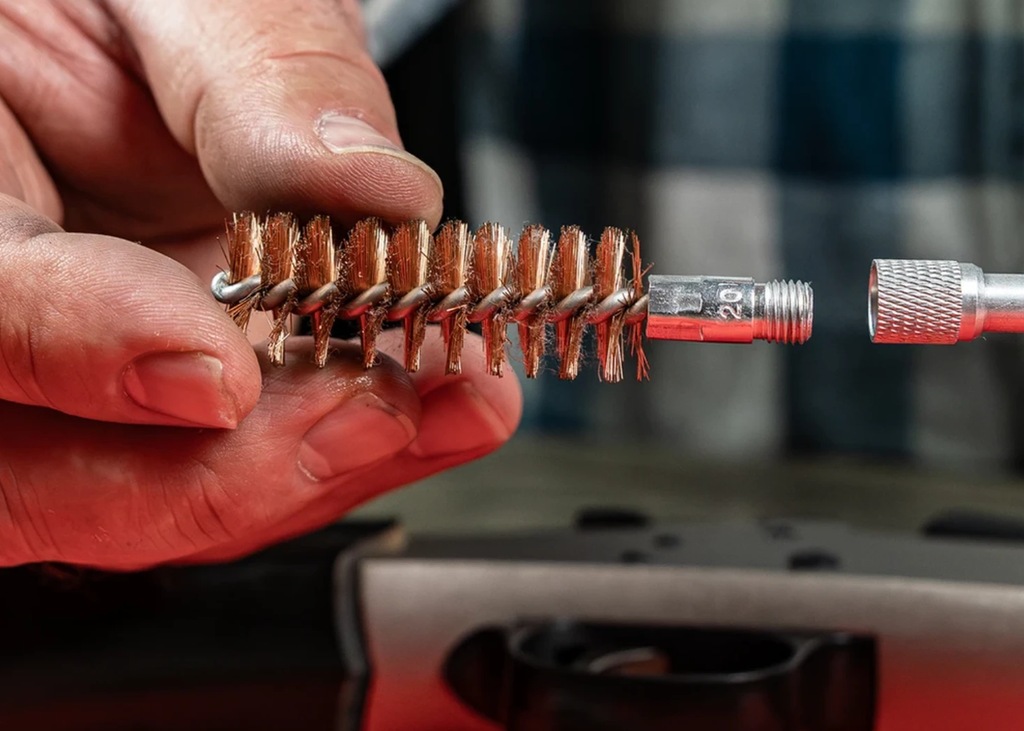
Why Is the Brush Material So Important?
The bristles must be stiff enough to remove gunpowder residue, lead deposits, and other contaminants, but at the same time, they must not be overly abrasive to the barrel.
This is precisely why brushes made of softer metals are typically used to clean the bore. Phosphor bronze, for example, is softer than the steel used in the barrel but still stiff enough to effectively remove contaminants. Barrel manufacturers also recommend bronze brushes for routine cleaning, whereas stainless steel brushes may be too abrasive.
In addition, choosing the right brush size is crucial. Even the right material won’t produce the desired result if the bristles don’t make sufficient contact with the bore walls.
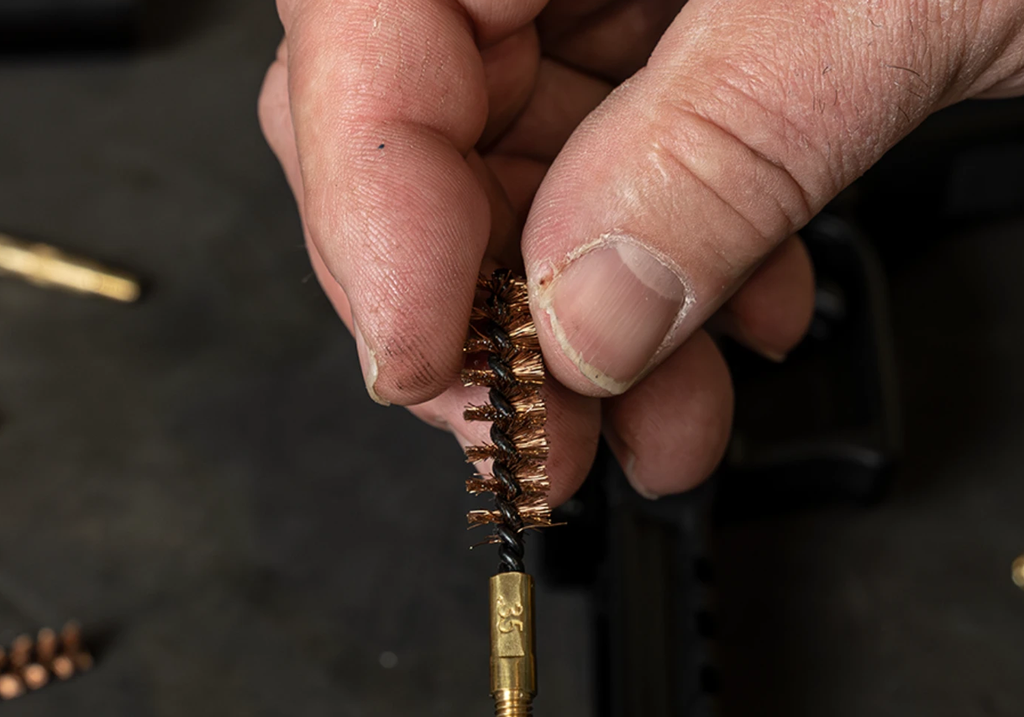
Nylon, Bronze, or Steel: Which One Should You Choose?
Nylon brushes
Nylon is well-suited for light cleaning, applying cleaning solutions, and removing relatively fresh deposits. Brushes made of this material are also convenient to use with products designed to remove copper fouling, as they do not react with them in the same way that bronze bristles do.
However, nylon has one drawback – it is less effective against stubborn deposits. If fouling has had time to build up, soft bristles may not be sufficient to remove it mechanically.
Bronze brushes
Phosphor bronze is considered one of the most practical materials for cleaning the bore, as it combines sufficient stiffness with lower hardness than the steel used in the barrel. It is effective at removing carbon deposits, lead residue, and other contaminants that may remain after firing.
Therefore, bronze brushes are often a primary tool for regular cleaning. One manufacturer of such brushes is GUNNIX, whose products can be viewed at https://www.gunnix.us/catalog/bore-brushes. GUNNIX brushes feature phosphor bronze bristles designed to provide effective cleaning while being gentle on the bore.
Stainless steel brushes
Stainless steel is significantly harder than bronze and is not intended for routine bore cleaning. Due to its high hardness, this type of brush can be too abrasive for the barrel’s surface.
Therefore, it should not be used for standard maintenance unless specifically required and appropriate for the firearm. Barrel manufacturers explicitly warn against using steel brushes in the bore.
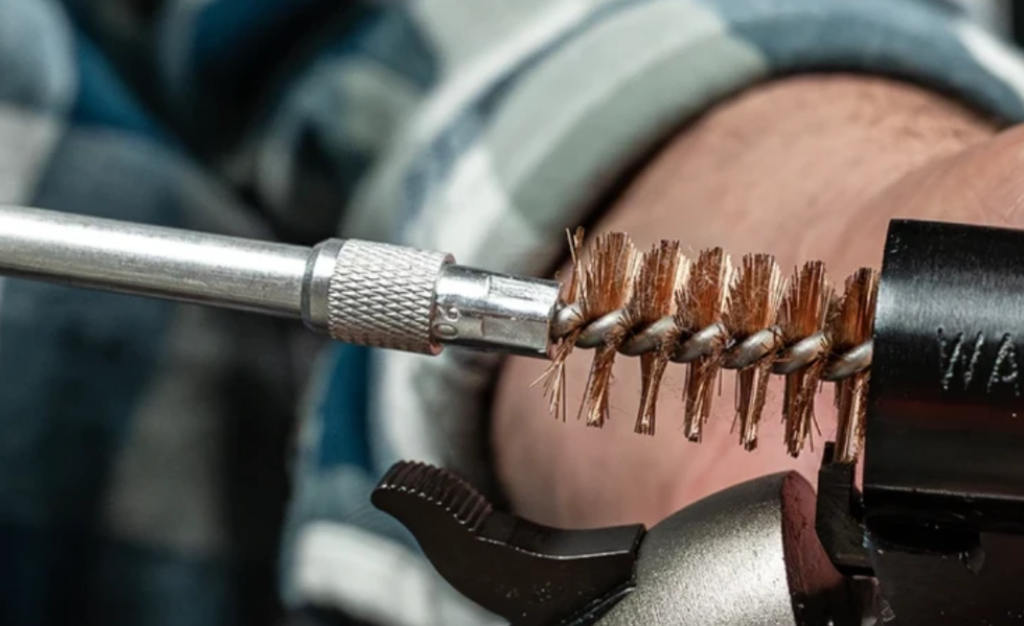
How Do You Choose a Brush for a Specific Firearm?
First and foremost, you need to select a cleaning accessory that matches the appropriate caliber or bore diameter, since using the wrong size can lead to problems:
- A brush that is too small will not make sufficient contact with the bore walls.
- One that is too large may be awkward to use.
Also consider the nature of the fouling and the cleaning agents you use. Nylon may be sufficient for light, regular cleaning, whereas phosphor bronze is more practical for removing heavy carbon buildup and lead deposits.
It’s also important to check that the brush’s threading is compatible with the cleaning rod or flexible cable you’re using.
Therefore, the question isn’t just which brush cleans the bore better, but also which one is suitable for regular maintenance without unnecessarily affecting the bore’s surface.